Superbill Creation and Delivery for Self-Pay Telehealth Patients
A provider's guide to building superbills that actually get self-pay patients reimbursed.
Self-pay telehealth billing has become a standard feature of outpatient mental health practice, and the superbill sits at the center of it. This article covers what the document must contain, where telehealth changes the rules, and how to build a delivery process that actually gets patients reimbursed.
Superbills as a routine workflow for telehealth providers
A substantial share of private-practice therapists work entirely outside insurance networks, and for those practices, the superbill is a document generated after nearly every session, for nearly every patient, as a matter of course. Mental health has also become the leading diagnostic category in commercial insurance telehealth claims, so the population of patients who need superbills and who happen to be receiving care over video is large, and nothing about current utilization trends suggests it will shrink. The policy environment has reinforced this further: providers contingency-planning for the October 2025 telehealth policy cliff were advised to assess how many of their affected patients would be able or willing to self-pay to retain telehealth access. When reimbursement policy shifts or coverage lapses, self-pay paired with a correctly built superbill becomes the continuity mechanism that keeps patients in treatment and keeps practices operating. Treating superbill generation as a routine operational workflow, rather than a one-off favor handled inconsistently by whoever is free that day, is what separates practices that scale this well from practices that create billing confusion for every client who asks for one.
What a superbill does in the self-pay telehealth transaction
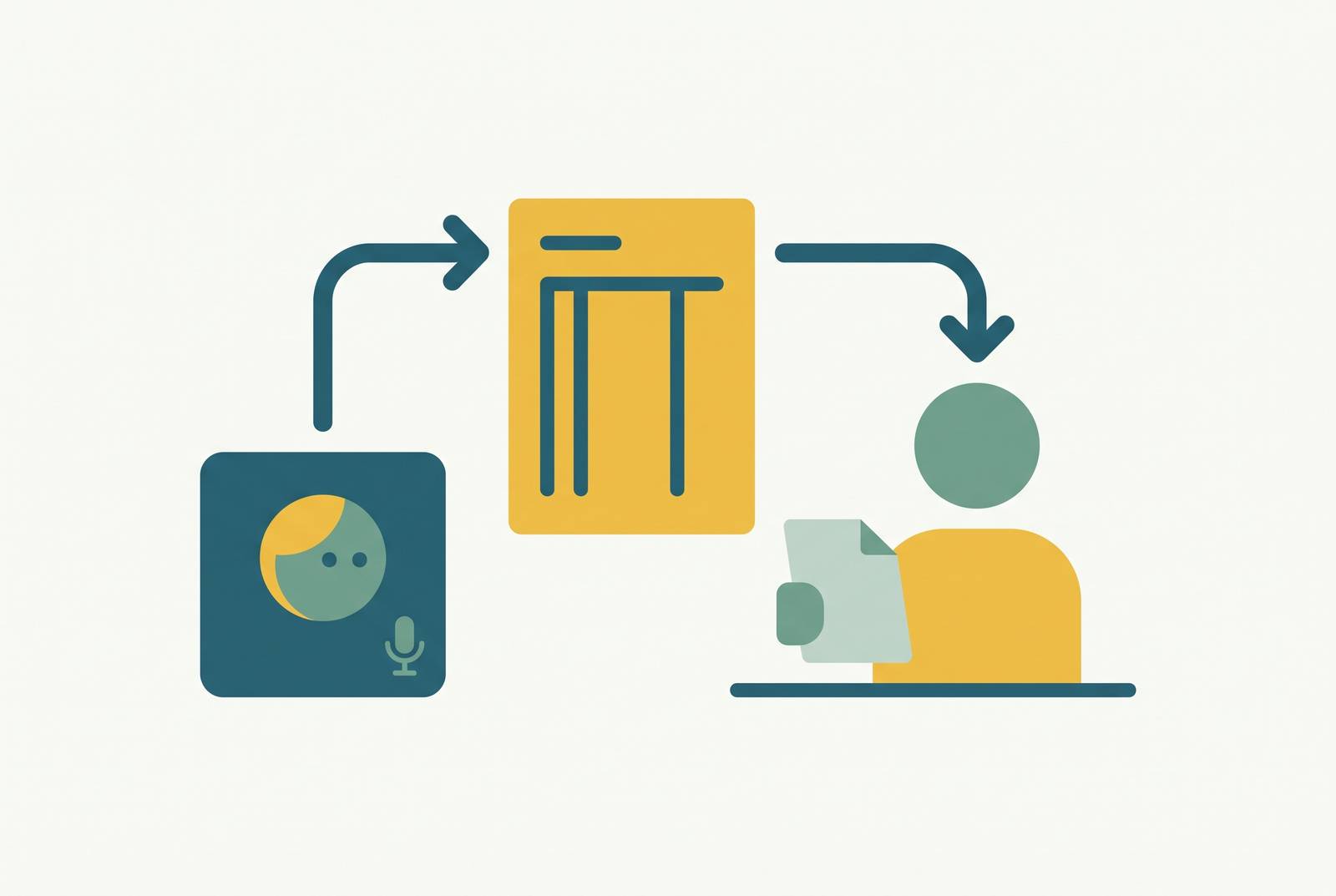
A superbill functions as a structured clinical receipt. It translates a session into the coded language that insurance payers require in order to process an out-of-network reimbursement claim, and it does this in a format a plain invoice cannot replicate. The money flow it supports has a specific sequence: the patient pays the provider directly for the session, the provider issues the superbill, the patient submits that superbill to their own insurer, and the insurer reimburses the patient, not the provider. The superbill is the document that makes that third step possible; without it, the patient has no structured basis on which an insurer can adjudicate a claim.
What makes a superbill distinct from an ordinary receipt is the combination of information it carries in one place: the patient's identity, the provider's credentials, a clinical account of the visit, the medical codes that translate that account into insurance terms, and the fees charged. Three variables ultimately determine how much of that fee the patient recovers. The first is the patient's out-of-network deductible, which is often separate from, and higher than, their in-network deductible. The second is the plan's "allowed amount" for the service rendered, since reimbursement is calculated against that payer-determined figure rather than against whatever the provider actually charged. The third is the coinsurance rate that applies once the deductible has been met. None of these variables are things a provider controls. The accuracy of the superbill itself, the one component of the transaction fully within the provider's control, matters so much because of that.
The required data elements every telehealth superbill must contain
A superbill missing any of a defined set of fields gets rejected by a payer regardless of how well the telehealth-specific details are handled. The baseline requirements apply whether the visit happened in an office or over video, and they fall into three blocks.
The provider information block needs the provider's full name, practice name, address, and phone number, along with the National Provider Identifier (NPI). It also needs the Tax Identification Number (TIN or EIN); without it, the payer has no way to verify the provider's identity for payment purposes. The provider's license and taxonomy code round out this block, and that code should reflect the state in which the provider is actually licensed and practicing, not simply the state where the practice is headquartered.
The patient information block is shorter but no less essential: the patient's full legal name, date of birth, and insurance member ID number. Any mismatch between this information and what the insurer has on file is enough to stall a claim before the clinical content is even reviewed.
The service detail block carries the date of service, the place of service code, the CPT codes describing what was performed, the ICD-10 diagnosis codes describing why the patient was seen, any applicable modifiers, the fee charged per service, and the provider's signature. Finally, the fee and payment information section documents the amount the provider charged for the session and the amount the patient actually paid. Every one of these fields forms the baseline. The telehealth-specific rules covered next don't replace any of them; they add two additional requirements on top.
What changes for telehealth billing
Telehealth superbills require exactly two field-level changes from their in-person equivalents: the Place of Service code and the modifier. Errors in either field rank among the leading causes of telehealth claim rejections, and because these two fields are the only ones that change, they deserve more attention per field than anything else on the document.
| Field | In-person use | Telehealth use | |---|---|---| | Place of Service (POS) | POS 11 (office) | POS 10 (patient at home) or POS 02 (patient at another non-home location, such as a school or workplace) | | Modifier | Generally none required | 95 (preferred by many commercial insurers, synchronous audio-video), GT (traditional Medicare/Medicaid, some commercial payers), or 93 (audio-only, where covered) |
The Place of Service code is determined by the patient's location at the time of the session, not the provider's. POS 10, the most common code for outpatient teletherapy, applies when the patient is receiving the service from home. POS 02 applies when the patient is somewhere else, such as a school or workplace, for the telehealth session. POS 11 must never appear on a telehealth superbill, even if the provider delivered the session from a physical office, because the code describes the patient's setting, not the clinician's.
The modifier, appended directly to the CPT code, signals to the payer that the service was delivered via telehealth. Many commercial insurers prefer modifier 95, which is used for synchronous audio-video sessions. Modifier GT has traditionally been used for Medicare and Medicaid telehealth claims, and some commercial payers still accept or require it. Modifier 93 applies to audio-only, telephone-based sessions, but coverage for audio-only care varies by payer, so providers need to confirm a payer's policy before using it.
A modifier mismatch, such as submitting 93 when the payer expected 95, sits alongside incorrect POS codes as one of the leading causes of telehealth claim rejections. Checking each payer's telehealth billing guidelines before selecting a modifier is the step that gets the claim cleared on the first submission. The CPT code itself stays fixed regardless of modality: a 60-minute therapy session is billed as 90837 whether it happens in an office or over video, since only the POS and modifier fields move. Adding a brief documentation note, such as "session conducted via HIPAA-compliant synchronous video telehealth platform," in the service description field gives payers the context they need and reduces the odds of a documentation-based denial layered on top of a coding issue.
ICD-10 and CPT code selection for common telehealth mental health visits
Getting the POS code and modifier right doesn't guarantee a clean claim. A superbill with perfect telehealth-specific fields still gets denied or underpaid if the diagnosis coding is wrong or too vague, which makes code selection just as consequential as the field-level corrections covered above.
CPT codes and ICD-10 codes do different jobs on the same document. The CPT code describes what the provider did during the session; the ICD-10 code describes why the patient was seen. Both need to be present, and they need to be clinically consistent with each other, or the claim isn't adjudicable regardless of how accurate either code is in isolation.
Three ICD-10 codes come up constantly in telehealth mental health practice: one for generalized anxiety disorder, one for major depressive disorder of moderate severity, and one for post-traumatic stress disorder. These are starting points for recognition, not a substitute for clinical judgment. The diagnosis code has to reflect the clinician's actual assessment of the patient's condition; selecting a code because it's familiar or because it bills cleanly, rather than because it matches the clinical picture, creates the exact kind of inconsistency that gets claims rejected or, worse, flagged for audit.
ICD-10-CM codes are updated annually, and those updates can delete or revise codes a practice has been using for years without anyone noticing until a claim bounces. Reviewing code sets after each annual update cycle, rather than assuming last year's codes still apply, is a maintenance task that belongs on every practice's calendar. For comprehensive code selection beyond the handful of codes most relevant to telehealth mental health visits, the official ICD-10-CM codebook or the coding tools built into a practice's practice management system remain the authoritative reference.
The Good Faith Estimate obligation that exists alongside the superbill and cannot be skipped
A technically perfect superbill does nothing to satisfy a provider's obligations under the No Surprises Act. Self-pay and uninsured patients are separately owed a Good Faith Estimate, and skipping that requirement exposes a practice to patient billing disputes and, when the relevant federal regulator enforces the rule, civil monetary penalties of up to $10,000 per violation, regardless of how accurate the superbill itself turns out to be.
The GFE and the superbill are legally distinct documents, and the distinction that matters most is timing: the GFE has to be issued before care begins, while the superbill is generated after the visit has already taken place. Confusing the two, or assuming one covers the function of the other, is the kind of gap that audits catch and routine practice misses.
The No Surprises Act applies the GFE requirement to every provider, including solo practitioners and small practices, for any patient who is uninsured, self-pay, or insured but choosing not to use their benefits for the service in question. That last category captures a meaningful share of telehealth patients who have insurance but are paying out of pocket specifically to access a provider outside their network.
Timing requirements are specific and unforgiving. If a service is booked at least three business days in advance, the GFE must go out no later than one business day after scheduling. If the appointment is scheduled further ahead than that, the GFE is due within three business days of scheduling. And if the actual charges a patient ends up facing exceed the GFE by more than a defined threshold, the patient has the right to formally dispute those charges. None of this process touches the superbill directly, but failing to run it alongside the superbill workflow leaves a practice compliant on one front and exposed on another.
Building the delivery workflow so the superbill reaches the patient at the right moment
A superbill that is coded correctly but delivered inconsistently still fails the patient it was built for. Workflow design matters because a document sitting unused in a patient portal, or arriving weeks after a session with no explanation of what to do with it, accomplishes nothing even when every field on it is accurate.
The delivery workflow needs to specify when the superbill goes out, in what format, and with what instructions attached. Monthly batching works for some practices, while per-session delivery works better for patients trying to track spending against an out-of-network deductible in real time. The format needs to be something a patient can actually submit to an insurer, whether that's a PDF attached to a secure message or a document generated directly through a practice's billing system. Because many patients have never submitted a superbill before, a short explanation of the next step, where to send it, and what reimbursement timeline to expect, turns a correctly built document into a claim that actually gets filed.
Sources
- What Is a Superbill? A Therapist's Guide to Out-of-Network Billing
- Navigate Claims & Billing With An Out-of-Network Client
- Superbill Template: Required Fields and How to Use It
- Transcript TeleBH 101 2nd Ed Part 3 Telehealth Modifiers Yarbrough 05 25 2025
- New federal law requires ALL physicians to provide good faith estimates to uninsured and self-pay patients
- No Surprises Act Good Faith Estimate and Patient-Provider ...
- No Surprises Act
- An Overview for Community Behavioral Health ...