Onboarding New Patients Remotely Without Documentation Gaps
Redesigning intake workflows closes the documentation gaps that break remote patient programs.
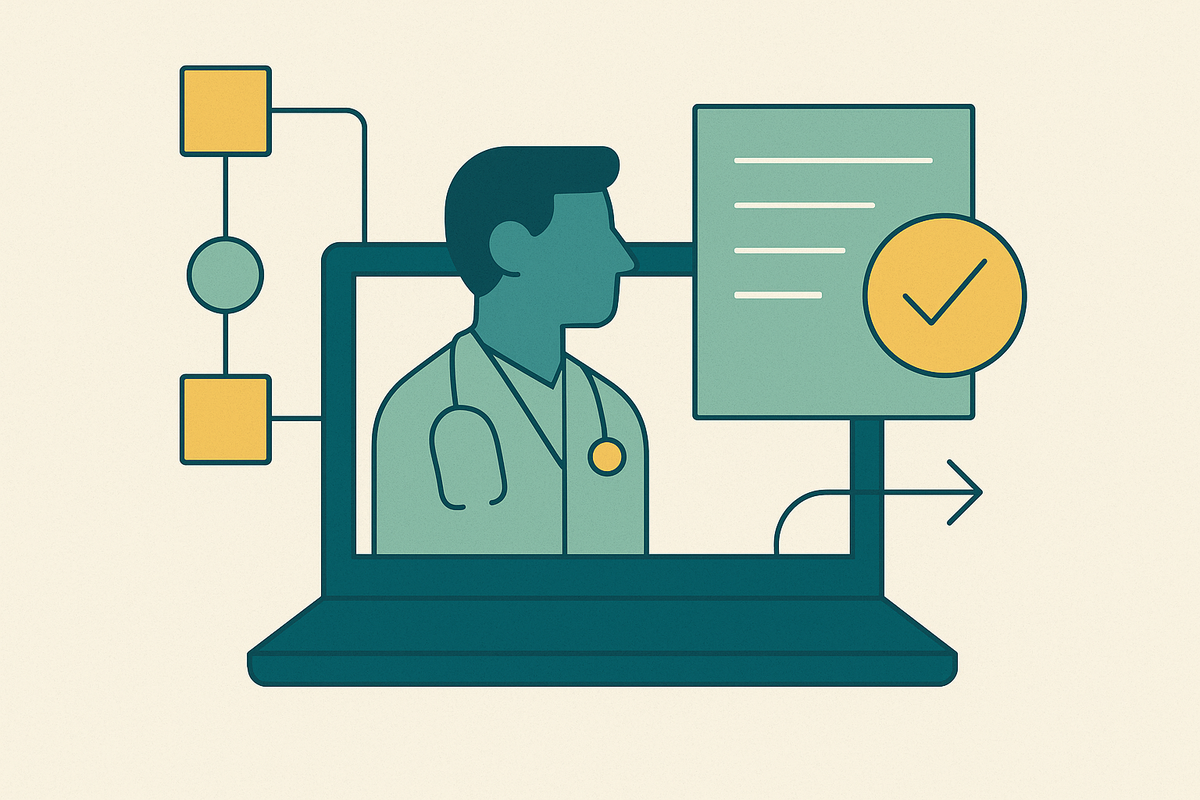
Remote patient onboarding fails because the intake workflows built for a physical waiting room were never rebuilt for a virtual one. The technology is not the obstacle. In a physical office, a front desk handles consent forms, checks identification, pulls a medical history, and confirms insurance before the clinician ever walks into the room. That sequence happens step by step, with staff catching what a patient forgets or skips.
That gap in the onboarding workflow appears in the data on why remote monitoring programs actually fail. An analysis of RPM deployments across 12 health systems found that most implementation failures traced back to intake errors, eligibility gaps, and follow-up breakdowns, not device accuracy or sensor performance. The hardware works. The sensors read blood pressure and glucose and oxygen saturation reliably. What breaks is everything that happens, or fails to happen, before the device ever ships to the patient's home.
Patients feel this mismatch directly, and it costs practices engagement before care even starts. Telehealth platforms and electronic health records are frequently not integrated with each other, so patients end up entering the same demographic and history information more than once, in different systems, for the same episode of care. That redundancy is not a minor annoyance. It signals to the patient that the practice's systems don't talk to each other, and it creates friction at exactly the moment a new patient relationship is supposed to be building trust.
None of this gets fixed by adding another telehealth feature or a nicer video interface. It gets fixed by identifying the specific points in the onboarding sequence where information is supposed to move from patient to record and instead falls through. Those points are consistent enough across practices and platforms that they can be named, mapped, and rebuilt one at a time.
The three handoff points where patient information most commonly falls through
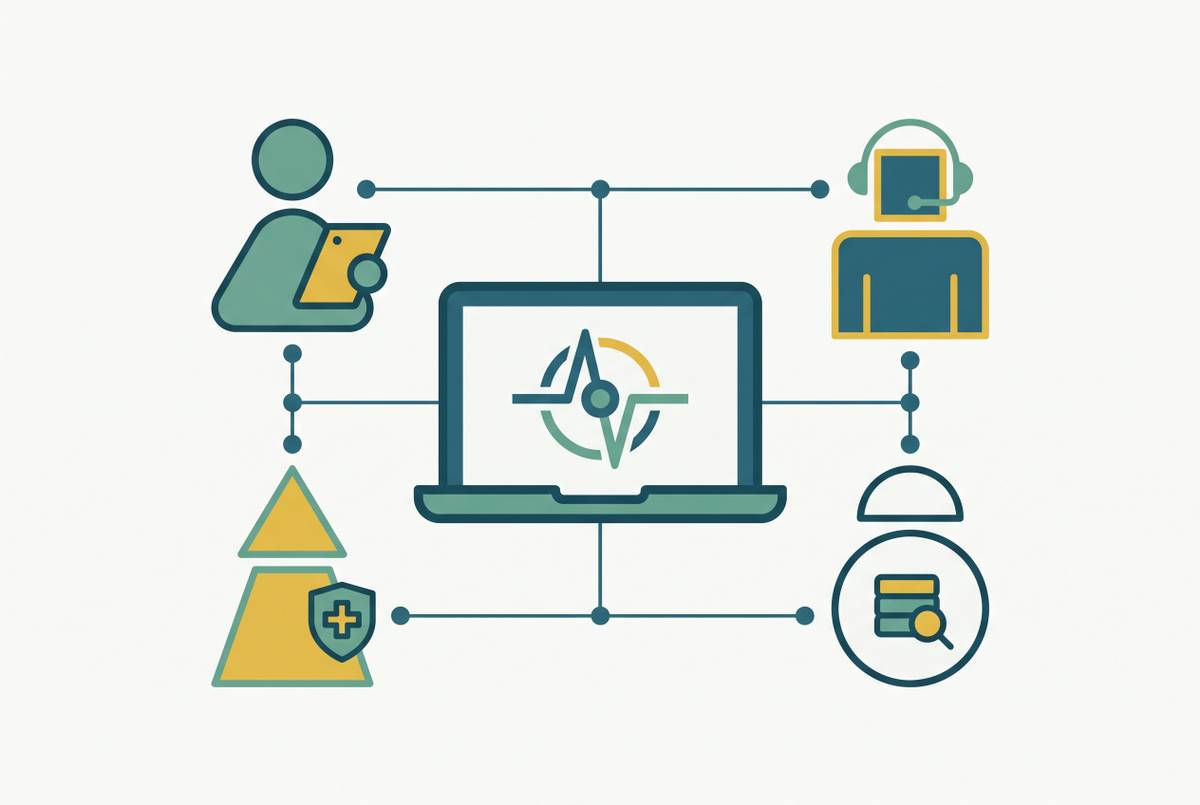
Documentation gaps in remote onboarding concentrate at three handoffs: consent capture, medical history collection, and records transfer from outside providers. Each one has a distinct failure mode in a virtual setting, and each one has an in-person equivalent that simply does not translate to a screen.
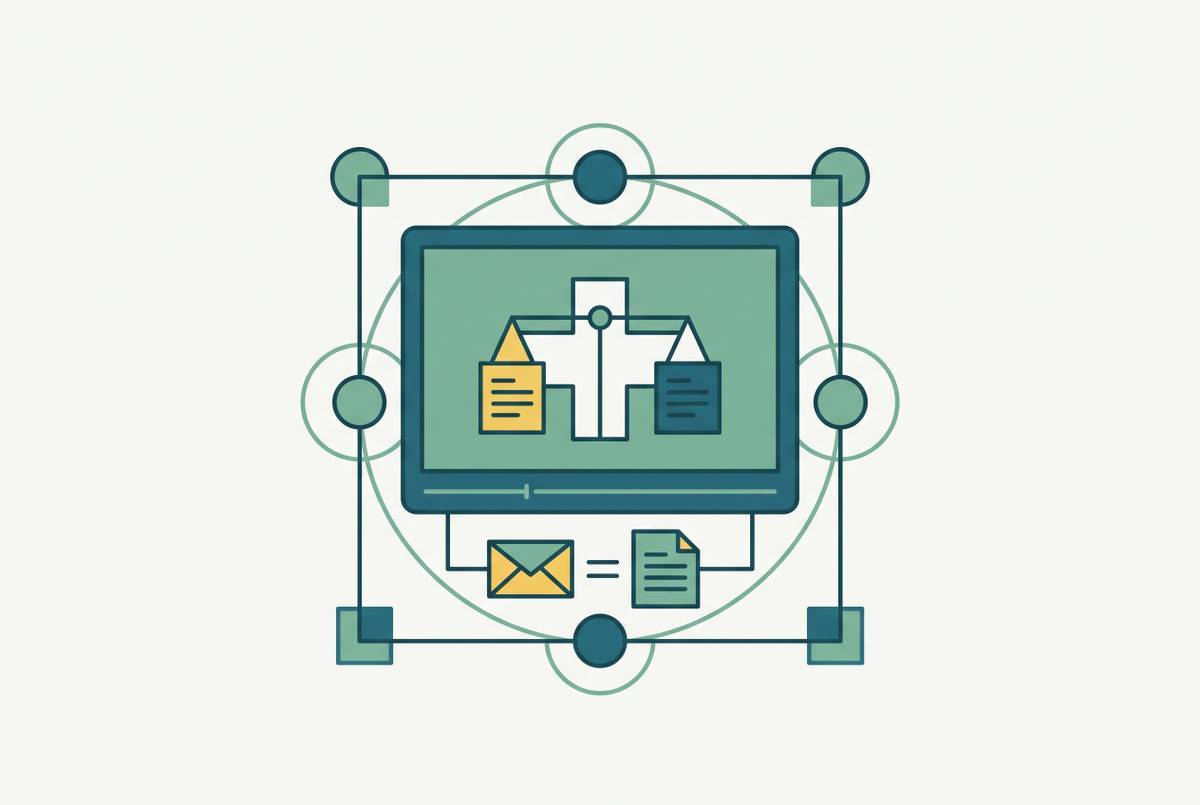
Consent is the first handoff. In-person, a patient signs a form at check-in, a staff member confirms it is complete, and it goes into the chart before the visit starts. In telehealth, consent has to cover elements that have no analog in a walk-in visit: the fact that the encounter is being delivered virtually, the platform being used, and the originating site of the visit. A 2022 OIG audit found that a substantial share of RPM claims lacked proper documentation for enrollment and consent, which created both compliance exposure and lost reimbursement. Many practices are still working from consent assumptions formed during the pandemic-era telehealth flexibilities, and CMS guidance has moved on considerably since then.
Medical history is the second handoff. Without a structured process for collecting history before the visit, the clinician's only source of information is whatever the patient says out loud during the encounter. That's a known driver of conservative clinical decisions, because a provider without a full history has less basis for acting decisively and more reason to delay or refer. Digital intake forms compound the problem: patients routinely skip sections or answer incompletely, and in a virtual setting there is no front-desk staff member standing by to catch the gap before the clinician logs on.
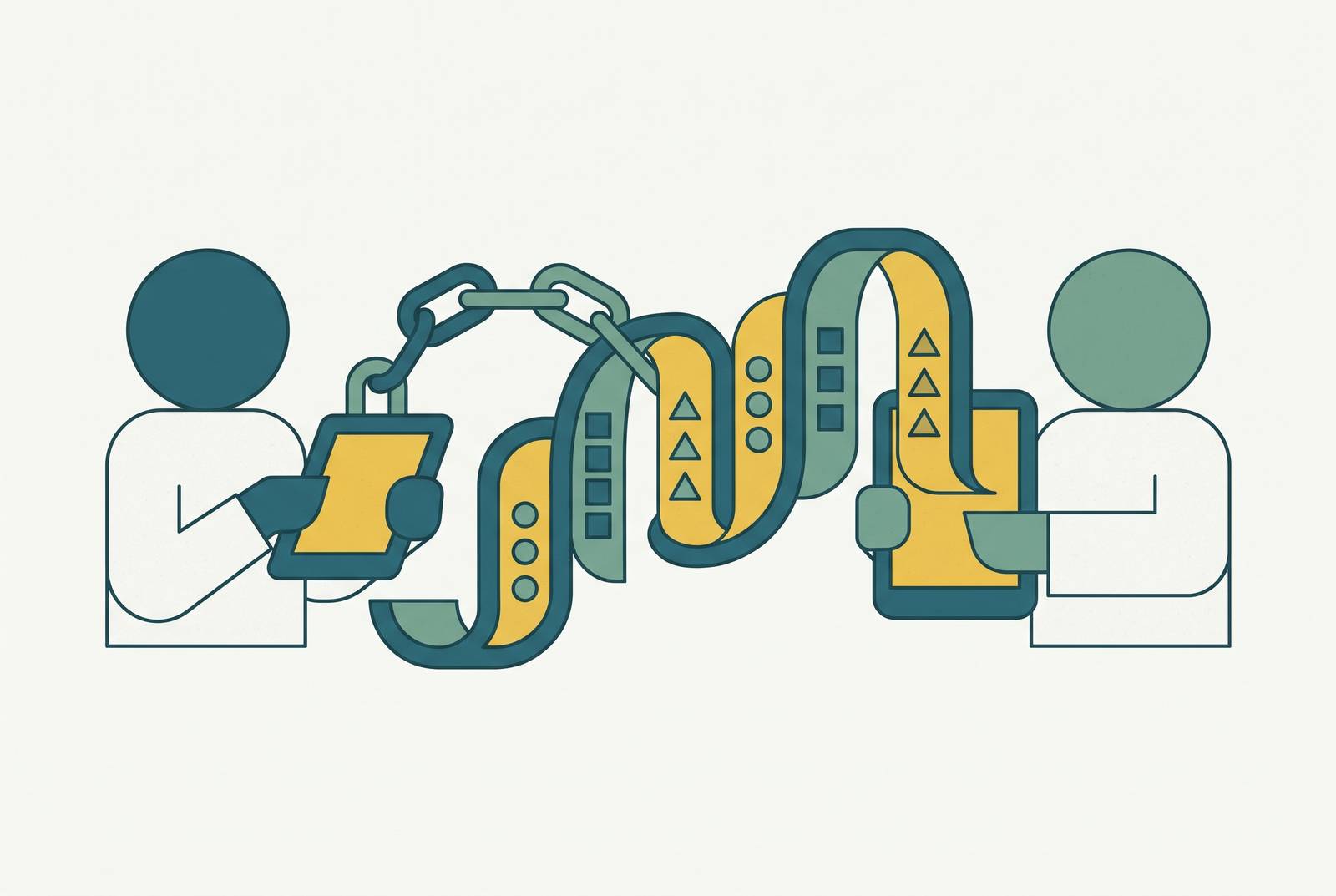
Records transfer is the third handoff, and it's the hardest to close because it depends on organizations outside the practice's control. Labs, specialist notes, and imaging results rarely arrive before a first telehealth visit, largely because most practices have no structured process for requesting them ahead of time. Poor integration between EHRs and telehealth platforms means that even records already held by the practice may not appear in the interface the clinician is actually looking at during the encounter. The record exists. It's just not visible where and when it needs to be.
Fixing consent capture before the first virtual visit begins
Consent has to be collected, documented, and timestamped before the encounter opens, not during it. The visit itself is too short and too dependent on a stable connection to be a reliable venue for something that needs to hold up under a compliance audit months later.
The technical bar for defensible telehealth consent is specific. An eConsent record needs an audit trail showing when consent was obtained, through what method, and for which type of encounter. It also needs to capture the elements unique to telehealth: that the patient understood the visit would happen virtually, on a named platform, from a specified originating site. A general treatment consent form carried over from in-person visits does not cover this ground, and a compliance reviewer looking at an RPM claim will look for it specifically.
The workflow design that closes this gap places consent inside the pre-visit intake sequence, triggered the moment a visit is scheduled and completed by the patient asynchronously, well before the appointment starts. CERTIFY Health's digital intake system, for example, collects electronic consent with timestamped audit trails as part of that pre-visit sequence, before any remote monitoring engagement begins. Consent becomes part of enrollment itself rather than a task squeezed into the first few minutes of a video call.
Identity verification sits inside this same gate, not as a separate system bolted on afterward. Verifying who a patient actually is, quickly, securely, and at scale, has become one of the central challenges of telehealth onboarding, and manual ID checks leave room for both error and fraud while slowing the whole process down. A workflow that starts with identity verification can trigger an API call that populates demographic data straight into the EHR, and if something flags, an identity mismatch, for instance, the system routes that case to manual review automatically. Consent and identity resolve together at the front of the process, before the clinician ever opens the chart, so no patient slips through and compliance holds up on review.
Collecting a complete medical history when the patient never comes through the door
A complete history for a new remote patient depends on a structured intake sequence that is sent, completed, and reviewed before the visit starts. The visit itself is too short, and too easily interrupted, to serve as the main mechanism for gathering history.
Video visits introduce a kind of fragmentation that in-person visits don't have to contend with. Poor audio, a frozen screen, or a shared screen that blocks a clinician's view of their own notes all break the sustained attention that careful history-taking requires. Patients also behave differently depending on when they're asked to fill out a form: forms presented during or immediately before a video visit get fewer completed fields and less detail than forms sent with real lead time.
The fix is structural rather than technological. Sending intake forms at the time of scheduling, rather than the morning of the appointment, gives patients enough time to actually locate their medication list, recall chronic condition history accurately, and answer social determinants of health screening questions with some care. That extra runway matters most for exactly the patients whose histories are most complex.
Accessibility has to be built into that runway, because the history collected is only complete when the format used to collect it is accessible. Technical barriers to digital intake fall disproportionately on older adults and people with limited digital literacy, and a form that assumes smartphone fluency ends up excluding many of the patients most likely to carry complicated medical histories. Multilingual and accessible formats are necessary for this population. They are the condition under which the history gets collected.
RPM enrollment adds a further requirement on top of general history-taking: the history intake also has to confirm chronic condition eligibility and document it before billing can start. A structured RPM enrollment workflow confirms the qualifying chronic conditions and RPM eligibility, updates how the patient wants to be contacted, obtains consent, and walks the patient through device use and data sharing, all before a single device ships. Medicare Open Enrollment offers a practical window for doing this systematically, since patients are already reviewing their coverage and thinking about their chronic condition needs at that time of year, which makes it a natural moment to complete intake and confirm eligibility.
AI-assisted intake tools are starting to reduce the burden this places on both patients and staff, including in streamlining SDOH screening during telehealth intake. These tools still run into a real limit: AI-driven intake agents cannot yet handle complex or ambiguous patient histories without a person reviewing the output. The technology can speed up the straightforward cases. It cannot yet replace clinical judgment on the hard ones.
Getting outside records into the chart before the visit, not after
Outside records almost never arrive before a first telehealth visit, and the reason is structural: most practices wait for the patient to trigger a records request rather than building the request into the intake workflow itself.
A practice's records can be inaccessible during a visit even when it technically has access to the records it needs. An EHR might already hold prior lab results or specialist notes, but poor integration between that EHR and the telehealth platform running the visit keeps those records out of the interface the clinician is actually using when the encounter starts. Better integration measurably closes this gap. Clinics using Medesk's cloud-based EHR platform reported a 35% reduction in patient onboarding time along with fewer lab sync errors and better continuity of care, a concrete illustration of what happens when the records system and the visit system are built to work together rather than separately.
The actual fix is a matter of timing. Records requests need to trigger at the moment a visit is scheduled. Automated release-of-information requests sent to a patient's identified prior providers as soon as an appointment is booked give those outside organizations real lead time to respond before the visit date arrives. Health information exchanges can support this kind of automation, but until they cover every provider a practice might need, practices still depend on the prior-provider information a patient discloses during intake. That dependency is why a complete medical history, the subject of the previous section, is a precondition for complete records, not a separate problem running in parallel.
For RPM programs, this continuity issue extends well past the first visit. A patient's prior device data, hospitalization history, and medication record all shape how a clinician sets monitoring thresholds and designs the care plan going forward. A device that transmits a blood pressure reading is only useful to a clinician who already knows that patient's baseline, current medications, and recent hospitalizations. Without that context, the number on the screen is just a number.
The cost of incomplete documentation for billing and compliance
The same gaps that weaken clinical care are now the basis of federal enforcement actions and claim denials. Intake completeness has moved from a quality improvement goal to a compliance obligation.
CMS telehealth billing requires documentation elements that have no counterpart in a standard in-person visit, and providers still operating on assumptions formed during the 2020 to 2021 telehealth flexibilities carry real audit exposure, because CMS guidance has changed substantially since then. What passed muster in 2021 does not necessarily pass muster today.
Enforcement has moved fast. In less than two years, OIG and CMS went from issuing public warnings about fraudulent RPM schemes to a coordinated enforcement posture built on structured oversight recommendations, standardized audit metrics, and what industry observers describe as the first False Claims Act settlement involving RPM billing practices. The schemes drawing enforcement attention involved documentation gaps at the point of enrollment: aggressive marketing tied to enrollment without legitimate clinical justification, and billing for monitoring that was never actually documented as having occurred.
OIG's 2025 audit metrics laid out specific red flags tied directly to intake failures. Auditors flagged sudden spikes in new patient enrollment at dozens of practices, a lack of any prior patient relationship affecting a large majority of RPM patients at some practices, and an absence of treatment management billing for a large share of patients elsewhere. Every one of those patterns traces back to what did, or didn't, get documented during intake and enrollment. The OIG's September 2024 report called for CMS to strengthen its oversight mechanisms because billing vulnerabilities and service delivery gaps had become visible at scale.
Documentation gaps also rank among the leading causes of claim denials in virtual care programs, adding a second layer of cost on top of enforcement risk. And the burden of fixing incomplete intake after the fact falls squarely on staff. Administrative tasks, including manual, repetitive patient registration, already account for nearly 30% of U.S. healthcare spending. Incomplete intake multiplies that cost, because every gap requires a follow-up call, a re-verification, or a manual correction that a properly built pre-visit workflow would have avoided in the first place.
How 2026 CMS coding changes affect intake documentation
The 2026 Medicare Physician Fee Schedule introduced new RPM billing codes that widen who qualifies for reimbursement. That expansion only benefits practices whose intake workflows are built to document the right things from the moment enrollment starts. A new code does not fix a broken intake process, it only raises the cost of not fixing it.
New CPT code 99445 addresses short-term or intermittent physiologic data monitoring, covering periods of roughly two to fifteen days within a 30-day stretch. Before this code existed, the only option for billing device supply was CPT 99454, which required sixteen or more days of transmitted data. That threshold shut out an entire category of patients: those who monitor intermittently, who start midway through a billing cycle, or whose adherence is inconsistent for reasons unrelated to clinical need. The new code creates a reimbursable path for exactly those patients, which expands the population a practice can legitimately enroll and bill for.
Expansion of who qualifies means expansion of who needs the full pre-visit workflow already described: eligibility confirmed and documented at enrollment, consent captured with a timestamped audit trail before the first device ships, medical history collected with enough lead time to be accurate, and outside records requested the moment the relationship starts rather than left to chance. A practice that rebuilt its intake process around those three handoints, consent, history, and records, before the 2026 code changes took effect is positioned to absorb more RPM patients without a corresponding increase in denied claims or audit exposure. A practice that has not done that rebuilding will find that the new codes simply widen the door through which documentation gaps can walk in.
Sources
- A 2026 Guide to Operationalizing a Remote Patient Monitoring Program
- Medicare Open Enrollment 2026 and Remote Patient Monitoring
- Top 5 Remote Patient Monitoring Software Platforms to Watch in 2026
- The Future of Remote Patient Monitoring - PMC
- 2026 Remote Patient Monitoring Updates: What Practices Need to Know—and Why It’s a Breakthrough Year for RPM